Eyes Next Door: A Verification Protocol for Neighbour-Supplied Evidence
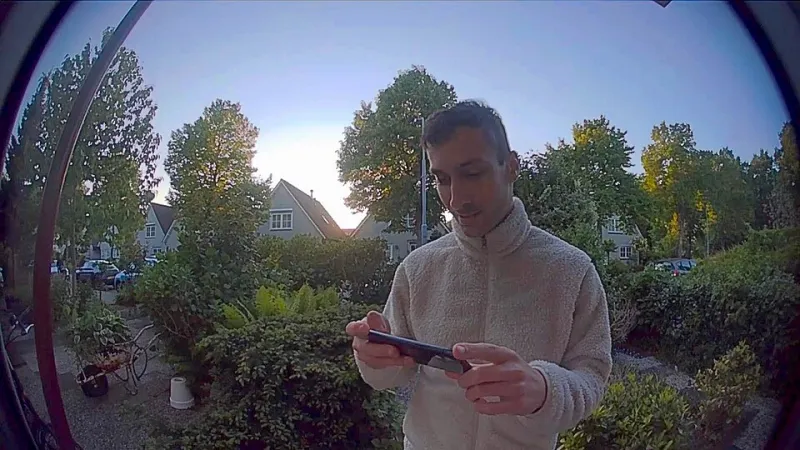
Photo: Amin, CC BY-SA 4.0, via Wikimedia Commons
The gap between an activation and a fact
A scaffold alarm reports an event, not a crime. Faced with a notification at 02:40, the question that decides the response — police attendance, keyholder visit, or nothing at all — is whether a human being has confirmed that there is somebody on the structure. Remote monitoring can confirm a sensor has triggered again; it cannot confirm a person.
In dense UK urban sites, the most useful confirmation frequently comes from a building that is not the client's: the residential block opposite, the convenience store with a camera over its fire exit, the doorbell of the terraced house at the end of the alley. Domestic and small-business cameras have proliferated, and they often see exactly the approach lines that the alarm is designed to cover.
The temptation, in the absence of an agreement, is simply to ring the number and ask. That works once. As a protocol it is fragile — legally, evidentially and practically.
What neighbours can realistically provide
Third-party verification rarely means live access to someone else's system. In practice it takes four forms: a call from a named contact who can see the scaffold from a window; recorded footage handed over after the event; participation in a business watch or Business Improvement District radio scheme; or a caretaker, concierge or security guard on an adjacent site who is willing to look. Each carries a different data protection footprint.
The data protection position, briefly
Footage filmed from a dwelling for domestic purposes is generally outside the scope of the UK GDPR, but the exemption is narrow in practice: it does not follow the footage once it is shared for a business purpose, and the ICO has long maintained that domestic cameras should not be positioned to capture beyond the boundary of the property.
Where a commercial occupier is involved — a shop, an office, a managing agent — the UK GDPR and the Data Protection Act 2018 apply in the ordinary way, and their signage and privacy notices will usually say something about why footage is captured.
For the scaffold operator, the critical point is this: as soon as you receive footage or a verbal description obtained through an alarm response, you are likely to be a controller of that personal data in your own right. You need a lawful basis — normally legitimate interests, with a documented assessment — a retention period, a means of handling a subject access request, and a rule about who may view the material. A verbal assurance over the phone is not a chain of custody.
Consent is a poor basis for this work. It can be withdrawn at any moment, including midway through an insurance claim, and it is not genuinely free where a neighbour feels pressured by a contractor working next door.
What to agree before you rely on anyone
A short written note, agreed before the scaffold goes up, resolves most of the difficulty. It should cover:
- Contact route and hours. A named person or number, and an explicit statement that there is no obligation to answer or to act.
- What is being asked. Observation only, not intervention. Neighbours should never be expected to challenge an intruder.
- Sharing. That footage or a description may be requested after an activation, that it will be used for security and insurance purposes only, and how it will be transferred.
- Retention. How long the operator will keep any material received, and that originals remain with the neighbour.
- No live access. The default position should be no remote viewing of a third-party system, which introduces a second controller and a permanent privacy problem.
- Safeguarding. Where the adjacent building is residential, the note should say that footage of common parts and gardens is not sought unless an activation has occurred.
For commercial neighbours, agree the same points with the facilities manager and confirm whether their own privacy notice already covers sharing with law enforcement and insurers.
Wiring verification into the response plan
The protocol is only useful if it is graded. A workable structure runs in escalating tiers: sensor confirmation from a second zone in the same corridor; audio or visual confirmation from an on-site device; remote monitoring analysis; third-party confirmation from a neighbour or watch scheme; and finally attendance. Each tier should have a defined action and a defined decision-maker, and the plan should say what happens when a tier is unavailable.
It also needs a fallback. A neighbour who works nights, or who is away over Christmas, cannot be a load-bearing part of the plan. Third-party verification should be treated as an enhancement to remote monitoring, not a substitute for it.
Recording what you receive
Every activation that involves third-party input should generate a short record: the time of the alarm, the time of the call, who was spoken to, what was described, and whether any material was received. Where footage is handed over, log the format, the time and date it is said to cover, the person who provided it, and where it is stored. Copy it into a controlled location, do not edit it, and note any gap between what the neighbour described and what the material shows.
Insurers and, on occasion, the police will read that record. A file that says ‘neighbour confirmed via doorbell’ with no date, name or clip reference is worth very little.
Why winter exposes the weakness
Winter concentrates the problem. Activations rise with wind, rain and low sun, the hours of darkness stretch either side of the working day, and the neighbours whose windows overlook the scaffold are more likely to be indoors — which is helpful — but also more likely to have curtains closed and to be slower to respond to a ring at an unsociable hour. Frost on a camera dome and low-light grain reduce the evidential value of what is captured.
Agreeing the protocol in November is better than discovering in January that the only camera covering the alley belongs to a householder who has never been asked, does not know who to call, and has already deleted the clip.