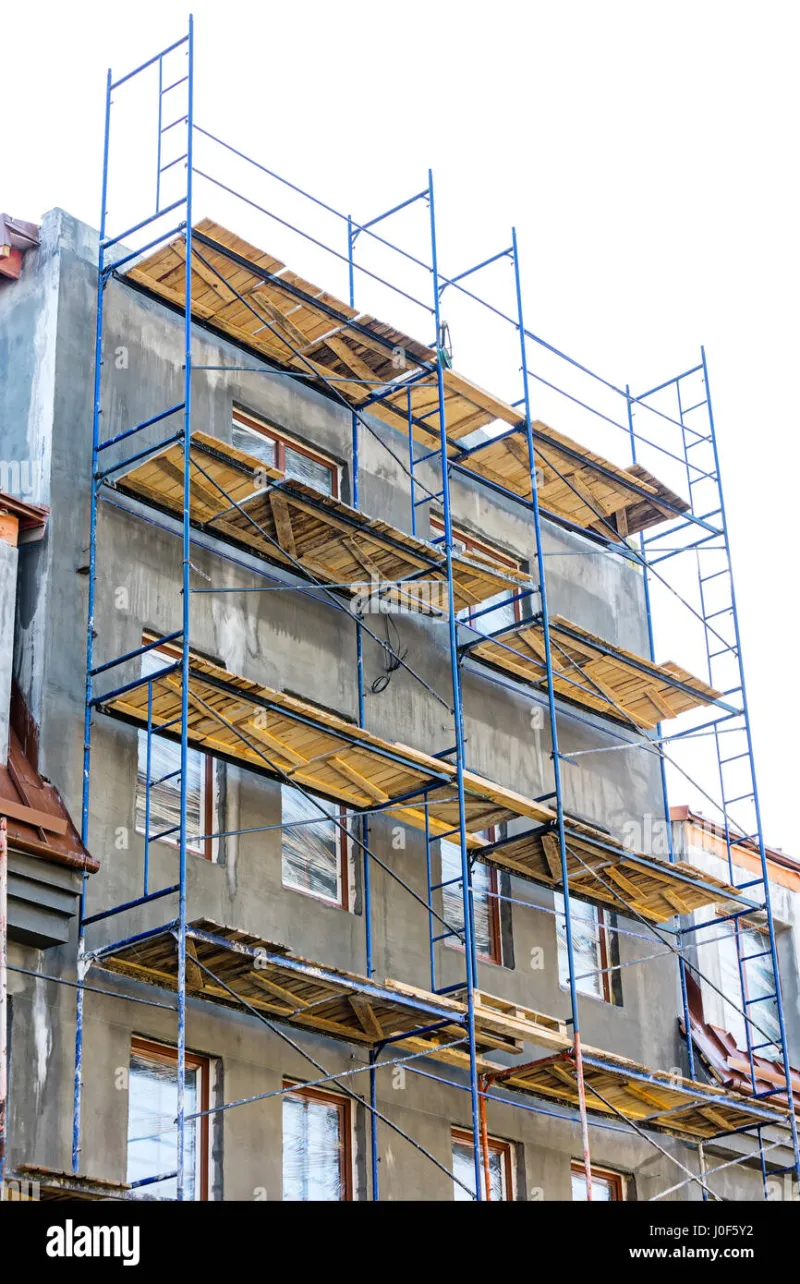
Winter 2026 Scaffold Security Audit: Five Thief-Prone Weak Points and the Alarm Layers That Close Them

Photo: Leonhard Lenz, CC0, via Wikimedia Commons
As UK sites move into the darker winter months, opportunistic theft tends to shift from late-night forced entry towards late-afternoon probing. Scaffolds that were overlooked during long summer evenings become concealed routes after dusk, and unlit elevations offer cover for quick work. The following audit is intended as a practical walk-round guide for site managers and installers, not a general security lecture. Each weak point is paired with an alarm layer that can be specified or checked during the winter 2026 programme.
1. Ladder bays and first-lift access
The ladder bay is the most obvious route onto a scaffold and the first place an intruder will test. A temporary gate, an unsecured ladder or a missing toe board can turn a controlled access point into an open door. Alarm layering should begin with a contact sensor on the gate or hatch, backed by a vibration detector on the ladder or standards where climbing and leverage are likely. A PIR covering the first lift can confirm movement after the initial contact, while clear signage at ground level warns that the route is monitored. Where the bay is hidden from the street, a local sounder and strobe should be visible from the approach rather than buried inside the scaffold.
2. Ground-floor doors and rear elevations
Rear doors, service corridors and ground-floor windows are routinely probed on terraced refurbishments, particularly where a rear alley provides cover. Contact sensors on doors and opening windows are the first layer, supplemented by a beam across the rear elevation or yard. Vibration detectors on adjacent frames or scaffold standards can catch attempts to force or lever before a door is opened. PIRs should be aimed along the elevation rather than across a neighbour's garden, and any beam should be checked for interruption by bins, signage or vegetation. Remote signalling is important here because rear elevations are often unheard from the site cabin.
3. Dark upper decks and roof edges
Thieves use scaffolds to reach upper floors, roof plant and leadwork that would otherwise be difficult to access. Upper decks can be dark by mid-afternoon in December, and a single unlit elevation may be enough to conceal movement. Vibration detectors on roof-edge standards and guardrails, a beam along the upper deck and a PIR on the stair tower provide overlapping coverage. Hatch contacts should be fitted where scaffold access reaches a roof. Lighting should support detection rather than advertise the site, and sensors should be positioned so that wind-driven sheeting does not create repeated activations.
4. Material stacks and plant compounds
Copper, lead, tools, fuel and generators remain attractive targets. Material stacks left on decks or in compounds are vulnerable when they are visible from the street or alley and are not covered by detection. A compound gate contact, a beam across the storage area and a PIR covering the approach form a useful layer. Vibration detectors can be fitted to stillages or secure racks where the manufacturer permits, but the mounting must be rigid and the sensitivity set to avoid alarms from wind-blown debris. High-value items should be moved inside secure stores overnight, with the alarm system acting as the notification layer rather than the only barrier.
5. Cabins, containers and temporary stores
Welfare cabins, tool containers and temporary stores are often the weakest physical units on site. Their locks may be lighter than the scaffold itself, and they are frequently placed at the perimeter. Contact sensors on doors and shutters, an internal PIR and a vibration detector on the container body provide a layered response. Remote monitoring should be configured so that an activation outside working hours reaches a keyholder or alarm receiving centre promptly. Signage should be fixed at eye level and maintained; a faded sticker offers little deterrence. Battery condition and tamper protection should be checked as part of the same visit.
Winter commissioning notes
Cold weather affects both hardware and response. Batteries should be checked against the manufacturer's temperature ratings, and external devices should retain their IP rating after any adjustment. Condensation and frost can obscure PIR windows or beam optics, so lenses and reflectors should be inspected during the weekly site walk. Arming times should be brought forward to match earlier dusk, and event logs should be reviewed for activations caused by wind, rain or thermal movement. Keyholder lists should be current for the Christmas shutdown period, and temporary disarming for deliveries should be time-limited and recorded. A short winter audit of these five areas will not eliminate theft risk, but it will close the routes that opportunistic thieves probe first.