The Three-O'Clock Risk: Alarm Zoning for Scaffolds Adjoining Schools and Play Areas

Why the threat model changes at the hoarding line
A scaffold beside a school, park or play area is still a construction asset, but the dominant risk is not usually organised theft. It is unauthorised access: children climbing lower lifts, teenagers testing the hoarding, and members of the public treating the scaffold as a route or vantage point. The direct loss may be modest—a few fittings, a damaged toe board—but the liability exposure is not. A fall from a scaffold creates a serious incident, reputational damage and an investigation that will examine what the site knew and what it did about foreseeable access.
Alarm design therefore needs to shift emphasis. The question is not only whether the system detects a thief at 02:00, but whether it detects and discourages a curious approach at 15:30 without turning every movement along a public footpath into a siren event.
Detection layers for public-facing elevations
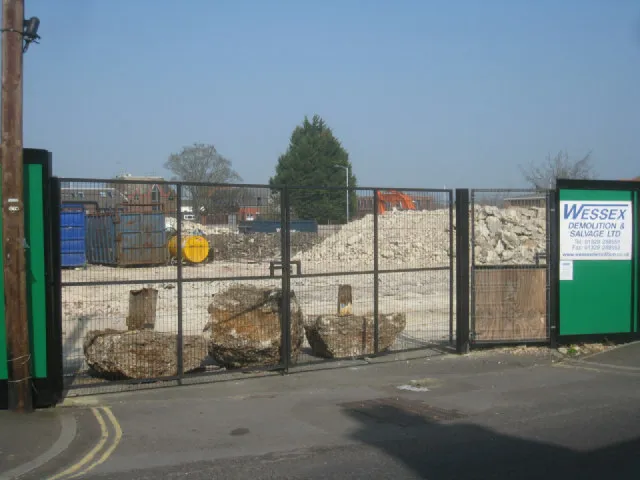
Start by separating the public-facing elevation from the working site. A school boundary or park edge should be its own zone, with detection aimed at the hoarding line and the scaffold access points rather than the open footpath. Gate contacts, hoarding vibration sensors and scaffold-mounted detectors can provide staged confirmation: an approach, a breach of the line, then movement on the scaffold. That sequence is more credible than a single motion sensor covering both pavement and scaffold.
Where the scaffold runs close to a playground, avoid broad passive infrared coverage that looks through or over the boundary. Use detectors with adjustable sensitivity and narrow fields of view, and set them to confirm a climb rather than register passers-by. Access points should be zoned individually so that an activation at a ladder or loading bay is distinguishable from a child touching the hoarding. The zone map should be readable by a responder who has never visited the site.
Signage that informs before it alarms
Signage does not replace detection, but it changes the nature of the encounter. At a school-adjacent site, the first audience is often a child or parent, not a burglar. Boards should be mounted at eye level on the public side, use clear language and state that the site is protected and monitored. Include an out-of-hours contact number and the name of the responsible contractor. Avoid warning text that is aggressive or ambiguous; the aim is to remove the excuse that access was not obviously prohibited.
Inside the hoarding, repeat the message at ladder access points and at the first lift. If the alarm has a local sounder, a short spoken or tonal warning can be more effective than an immediate full siren. It gives a person who has climbed without intent a reason to retreat before the event escalates.
Siren placement and off-site nuisance
Siren placement is where many otherwise sensible specifications fail. A sounder mounted on the school-facing elevation may deter one intruder and disrupt a whole assembly. Place external sounders to project into the site or along the least sensitive boundary, and use directional units where possible. Set cut-off timers so that an activation cannot run indefinitely, and use strobes for local indication where noise is the greater nuisance.
A two-stage response is usually appropriate. During school hours, the system can notify the site manager and a monitoring centre first, with the external siren suppressed or delayed until a breach is confirmed. Outside school hours, the balance can shift towards audible warning, but the siren should still be positioned and timed to avoid exporting the problem to neighbouring homes. The logic should be written into the operating protocol, not left to whoever is on call.
Escalation routes agreed in advance
The alarm is only one part of the response. Before commissioning, agree who will attend, who will authorise a reset and who speaks to the school or local authority. A typical matrix includes the site manager, the out-of-hours security provider and a nominated contractor contact. For sites on local authority land, add the relevant officer and confirm whether the authority expects notification of every activation or only confirmed breaches.
Contact details should be tested, not simply listed. A 2026 handover file should include the escalation matrix, the zone map, the siren schedule and a log of test activations. Where the site adjoins a school, consider a short briefing for the business manager or site supervisor so that staff know what the alarm sounds like and what they should not do—namely, enter the site to investigate.
Commissioning with the neighbours in mind
Commissioning should include a walk test along the public boundary, ideally at a time when the school is occupied, so that detector sensitivity and siren audibility can be assessed in realistic conditions. Record which zones activate from a footpath approach and adjust before handover. After the first school term, review the activation log for nuisance patterns. A system that cries wolf beside a playground will be ignored by the very people expected to respond.
The objective is not to make the scaffold hostile to its surroundings. It is to make unauthorised access visibly pointless, quickly detected and properly escalated, while keeping the alarm's effects inside the site boundary.