Counting What Leaves: Designing Scaffold Alarms for Attritional Theft on Live Sites
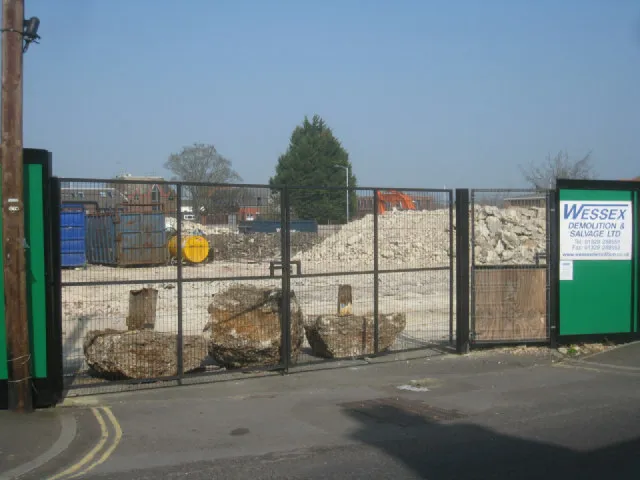
Photo: Sandy B , CC BY-SA 2.0, via Wikimedia Commons
Scaffold security is usually specified around an event: a fence line is breached, a door is forced, a siren sounds. That model is appropriate for the dramatic overnight attack, but it does not describe the loss pattern many UK contractors encounter on long-duration scaffolds. Fittings disappear in small quantities. Boards are swapped rather than stripped. Plant is moved during working hours and never returned. The loss is real, but no single activation occurs because the removal resembles ordinary site activity.
Why the break-in model undercounts the problem
Perimeter intrusion detection is binary in practice: it answers whether somebody entered a defined area outside permitted hours. It does not answer whether material left. On a live scaffold, authorised personnel, multiple trades, deliveries and late shifts create legitimate movement throughout the day. The alarm may be disarmed during working hours, and even when it is armed, a missing bag of couplers or a single board is unlikely to trigger a perimeter sensor.
This is the slow leak. It is not a failure of the alarm in the narrow sense; it is a mismatch between the threat model and the system design. A thief who understands a site can exploit that gap over weeks. By the time a material reconciliation identifies the shortfall, the evidential trail is often too sparse to support a claim or an investigation.
The leak paths on a live scaffold
Attritional loss tends to follow the same routes as legitimate material movement. Common examples include fittings removed in small bags, scaffold boards taken from less visible elevations, toe boards and ladders disappearing between phases, and powered plant or battery tools leaving via a loading bay and not returning. The point of entry matters less than the route of departure.
On a long-duration site, the highest-risk locations are often the loading bay, the hoist gate, the stair tower, ground-level storage compounds and the returns at the end of terraced frontages. These are not always the elevations that receive the most alarm coverage. A specification that concentrates on the external face may protect against climbing but leave the material flow uncontrolled.
Zone by material flow, not only by elevation
Traditional scaffold alarm zoning follows elevations: north face, south face, rear return. That is useful for detecting access and for directing a response, but it is incomplete for attritional theft. The design should also zone by material flow. A loading bay, a hoist landing and a storage compound are distinct security zones because they are where authorised and unauthorised removal look most alike.
The alarm schedule should separate working-hours monitoring from out-of-hours intrusion. During working hours, the objective is not always to sound a siren; it is to record movement, count events and establish patterns. Outside working hours, the same zones can be armed for intrusion. This dual-state logic allows the system to remain useful while the scaffold is live without generating nuisance activations from normal trade activity.
Loading bays and the authorised removal
The loading bay deserves particular attention because most slow leaks pass through a legitimate loading point. A simple door contact is easily defeated by staff holding a gate open or by a delivery that runs beyond its slot. A beam across the bay, combined with volumetric detection and timed arming, provides a more reliable record of movement. The aim is not to accuse every delivery; it is to create a time-stamped event that can be compared with the day's material movements.
Where credential control is used, the event log should record the zone, time, credential and duration of access. That record becomes valuable when a reconciliation discrepancy appears. It allows a contractor to ask specific questions rather than rely on general suspicion. The alarm is no longer only a siren; it is a source of management information.
Marking and reconciliation as alarm adjuncts
Technology alone will not close the slow leak. Asset marking and reconciliation routines are the controls that give alarm data meaning. High-risk items should be marked visibly and, where appropriate, forensically. A register of marked plant and fittings should be maintained, with responsibility assigned to a named person rather than left to site memory.
Reconciliation should be proportionate. Daily checks may be appropriate for powered plant and access equipment; weekly checks may suffice for fittings and boards. The key is to compare counts against the alarm log. If a discrepancy appears, the first step is to review loading-bay and compound events for the same period. Repeated small variances are a stronger signal than a single missing item, and they are exactly the pattern that a perimeter-only system will miss.
Specifying for evidence, not only for deterrence
A slow-leak strategy changes the procurement questions. Instead of asking only how loud the siren is, ask how long the log retains events, whether zones can be independently scheduled, whether working-hours events are separated from out-of-hours alarms, and how access at the loading bay is recorded. These are practical specification points for UK contractors, particularly where the scaffold will remain in place across multiple phases and subcontract packages.
Deterrence still matters, but it should not be the only output. Visible marking, signage and a credible response plan reduce opportunity. Logging and reconciliation detect the losses that deterrence fails to prevent. Together they create a system that is designed for both the break-in and the slow leak.
A practical specification checklist
- Map the material routes as well as the perimeter, including loading bays, hoists, stair towers and storage areas.
- Create separate alarm zones for working-hours movement and out-of-hours intrusion.
- Specify loading-bay detection that records events rather than relying on a held-open contact.
- Require event logs with time, zone, credential and duration, retained for the duration of the works.
- Combine alarm data with asset marking and a named reconciliation routine.
- Review repeated small variances as a security signal, not merely an accounting issue.
- Test the full process with a controlled removal exercise before the scaffold becomes fully operational.
On a long-duration scaffold, the most expensive losses are often the least dramatic. Designing alarms only around forced entry leaves the slow leak unobserved. Designing around material flow, access records and reconciliation gives contractors a way to see it before it becomes a significant shortfall.