Commissioning Without a Gap: Temporary Security for the Scaffold Build Phase
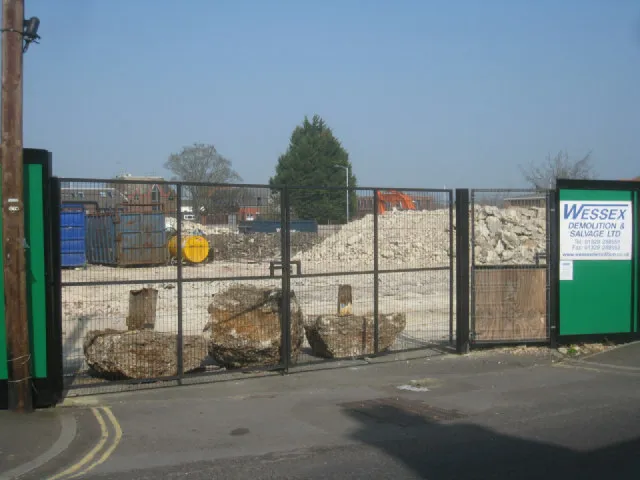
Photo: Sandy B , CC BY-SA 2.0, via Wikimedia Commons
The exposure window is not theoretical
On many UK sites, the most vulnerable period for a scaffold is not the first night after practical completion. It is the period immediately after the first lifts go up, when boards, fittings, couplers and tools are already on the structure but the alarm system has not been fully zoned, tested or accepted. The permanent installation may have been designed for the completed scaffold, yet commissioning often follows erection rather than running alongside it. That sequencing creates a predictable gap.
The gap should be treated as a planned phase with its own controls, not as an unavoidable interlude. A staged commissioning approach allows the alarm contractor, principal contractor and scaffold contractor to agree what protection is live at each build stage, who owns it and what evidence is required before the next lift proceeds.
Define the commissioning boundary in writing
Before the first delivery, the site team should record what is and is not live. A simple commissioning schedule can list each zone, the detection devices installed, whether they are temporary or permanent, and the date and time they were proved operational. The schedule should be held with the site security file and updated at each shift handover.
No zone should be assumed live simply because cabling or a detector is present. Temporary devices should be labelled clearly, and permanent devices that are not yet commissioned should be isolated and marked as such. This avoids the dangerous assumption that a partially installed system is providing cover.
Use temporary detection where the risk actually sits
During the build phase, temporary detection should follow the materials rather than the final alarm design. The highest-risk areas are usually the scaffold base, the principal access points, the compound gate and any concentrated stack of boards or fittings. Stand-alone battery-powered detectors, temporary contacts on compound doors and independent audible units can provide useful cover before the main panel is signed off.
These devices are not a substitute for the permanent system. Their purpose is to close a specific window, so they should be proportionate, tested and removed at the agreed stage. Daily checks should confirm battery status and radio or network connectivity where remote signalling is used. Any temporary device that cannot be monitored should still produce a local warning and be included in the site patrol routine.
Place beacons and sounders for the build, not the final layout
A siren positioned for the completed scaffold may be obscured by sheeting, debris netting or the next lift of standards. During erection, visual deterrents and audible devices should be placed where they can be seen and heard from the likely approach routes. Site entrances, compound boundaries and the immediate vicinity of material stacks are usually more relevant than a final-position sounder high on the scaffold.
Noise impact on neighbouring premises still matters, particularly on urban and residential sites. The aim is a credible local warning and a visible deterrent, not an alarm that is ignored because it is constantly triggered by site traffic. Device placement should be reviewed as the scaffold rises and adjusted when new lifts obscure existing units.
Control access before the system is commissioned
Access control is often treated as part of final commissioning, but the build phase needs its own controlled entry regime. A single signed entry point, a current signing-in sheet and a clear rule on who may issue or hold fobs should be in place from the first day of erection. Where key safes or lock boxes are used, their codes should be changed between trades and recorded.
Scaffolders, groundworkers and delivery drivers all need to know whether the alarm is live. A simple status board at the site office or gate can state which zones are active and which are temporary. If the permanent system is not yet operational, that should be stated plainly rather than implied by the presence of hardware.
Apply stage gates to the commissioning programme
A staged sign-off model gives the site a series of clear checkpoints. At the first lift, temporary detection, signage and access control should be verified. At mid-build, additional zones can be introduced and tested without waiting for the whole scaffold. At practical completion, the full system is proved, and at handover the evidence file is closed out.
Each stage should have a named owner and a record. Photographs of device placement, test results, zone lists and credential reconciliations are more useful than a single final certificate. The point is to show that protection was maintained through the build, not merely installed at the end.
A concise handover checklist
The following checklist can be completed at each stage gate and retained in the site security file:
- Zone map matches the scaffold as built and identifies temporary and permanent devices.
- Temporary detectors and sounders have been tested, labelled and scheduled for removal.
- Beacons and sirens are unobstructed and audible from the principal approach routes.
- Access credentials have been reconciled; leavers and changed trades have been removed.
- The response plan names the key holders and the out-of-hours contact route.
- Test logs, photographs and commissioning records are filed and signed.
Close the gap before the scaffold is complete
The first 48 hours after erection begins are a security phase in their own right. Contractors who plan temporary detection, sensible device placement and controlled access during the build are not adding unnecessary layers; they are preventing a known vulnerability from being left open while the permanent system catches up. A staged commissioning record also gives the principal contractor and insurer a clear account of what was protected, when and by whom.
At NRG Scaffold Alarms, the principle is straightforward: the alarm should not arrive after the risk. It should be introduced in step with the scaffold, with each stage proved and documented before the next one begins.